Overall
5.0
/ 10
PW
Jun 30, 2026, 11:08 AM
Camera: down-the-line (suboptimal)
You have two real assets most beginners lack: rock-steady balance (head sway under 1 cm) and excellent tempo (3.0:1). The thing holding the whole swing back is a very short, arm-dominant motion — measured shoulder turn of only ~14° at the top and hips just ~4° open at impact. Note that the heavy backlighting makes the silhouette hard to track, so those rotation numbers may read a touch low, but both the frames and the data clearly point to a lack of body turn. Fix the rotation and this jumps several points fast.
3 swings detected in this clip — the clearest one was analyzed. Tempo across swings: 3.5:1 ±0.5 — lower spread means a more repeatable swing.
Swing Replay
Original recording (no overlay)
Measured Biomechanics
Measured from 3D pose estimation (±5° / ±2 cm). Green bands are beginner reference ranges for a full iron swing, not absolutes.
Key Frames
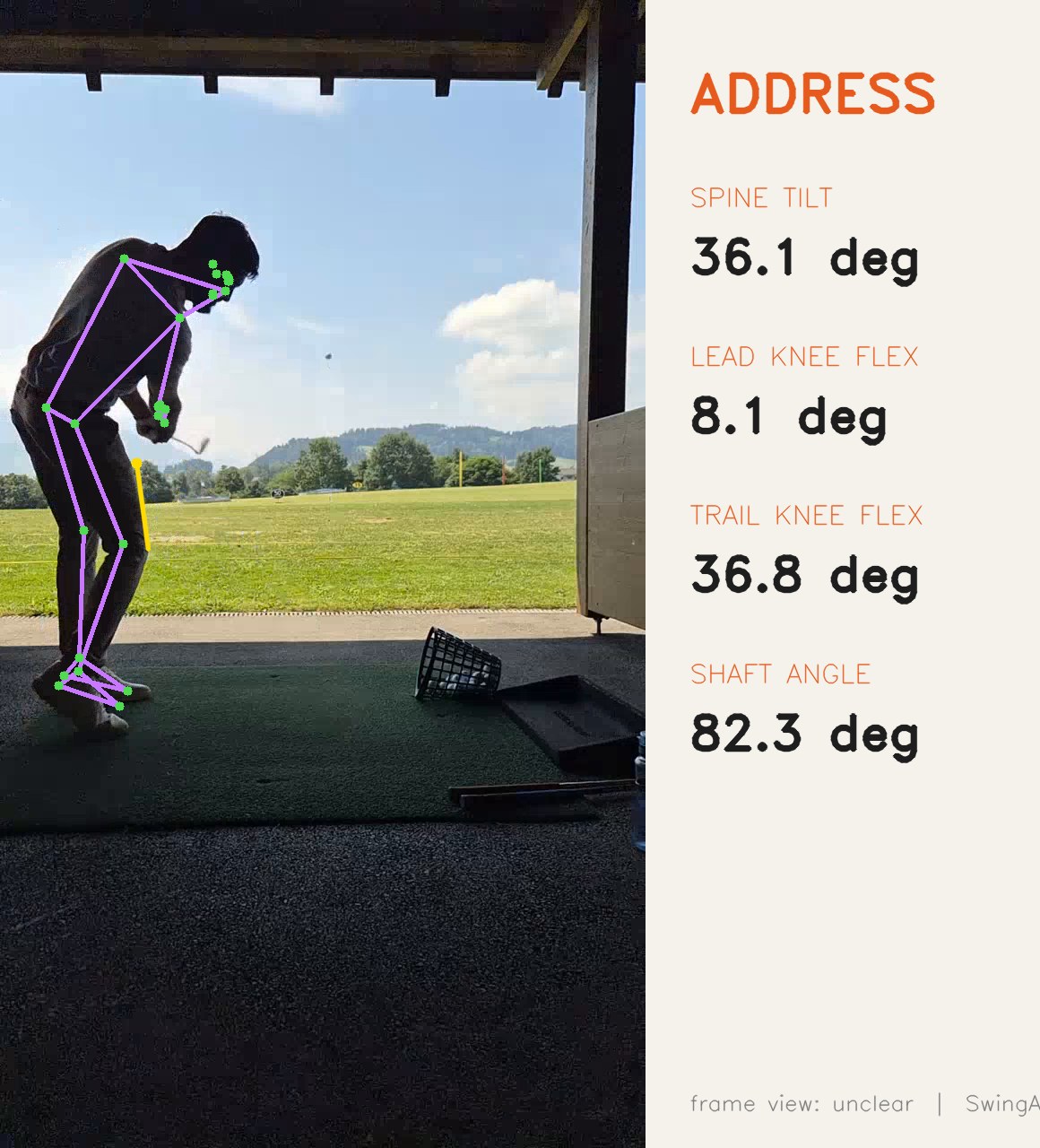
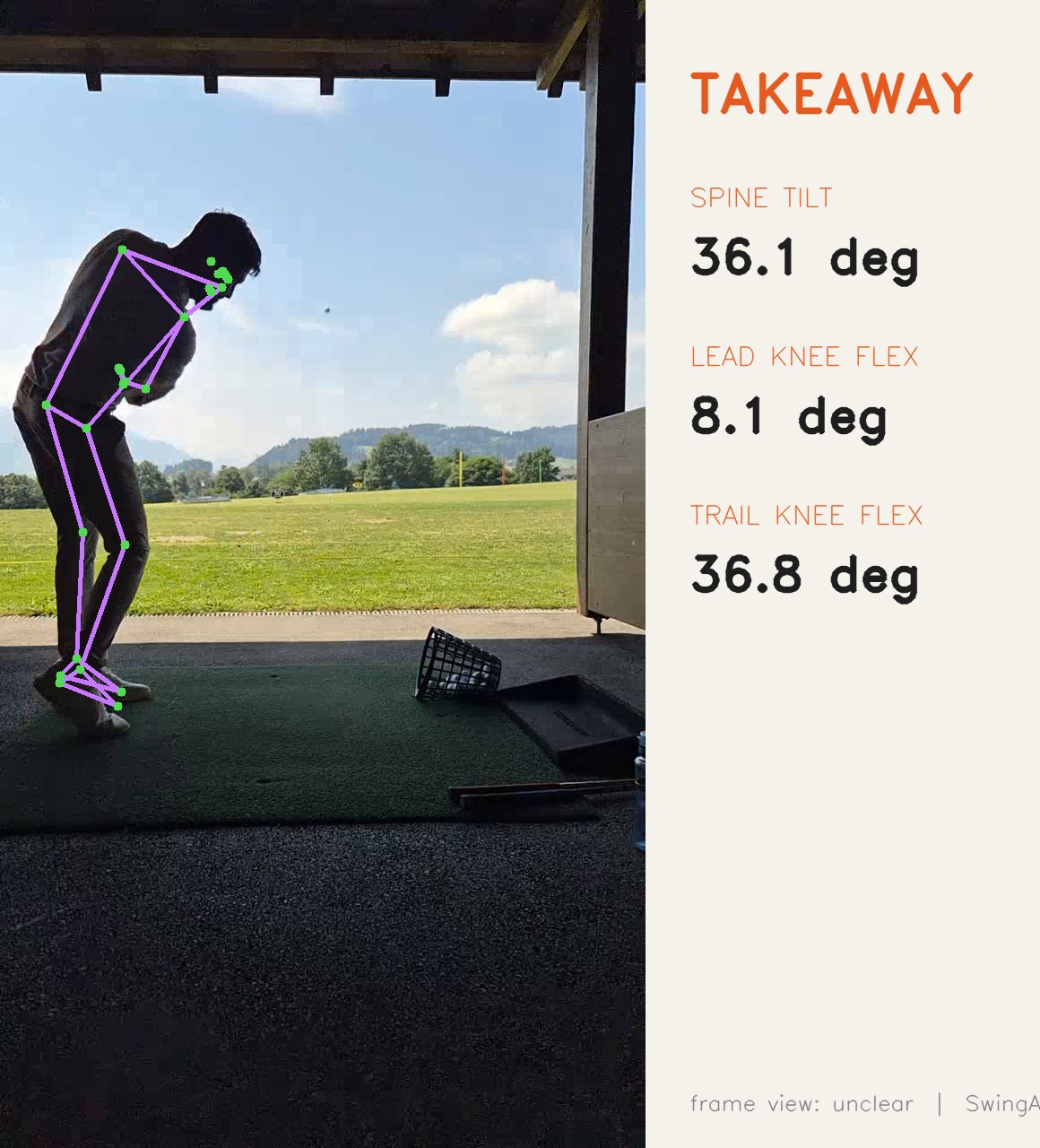
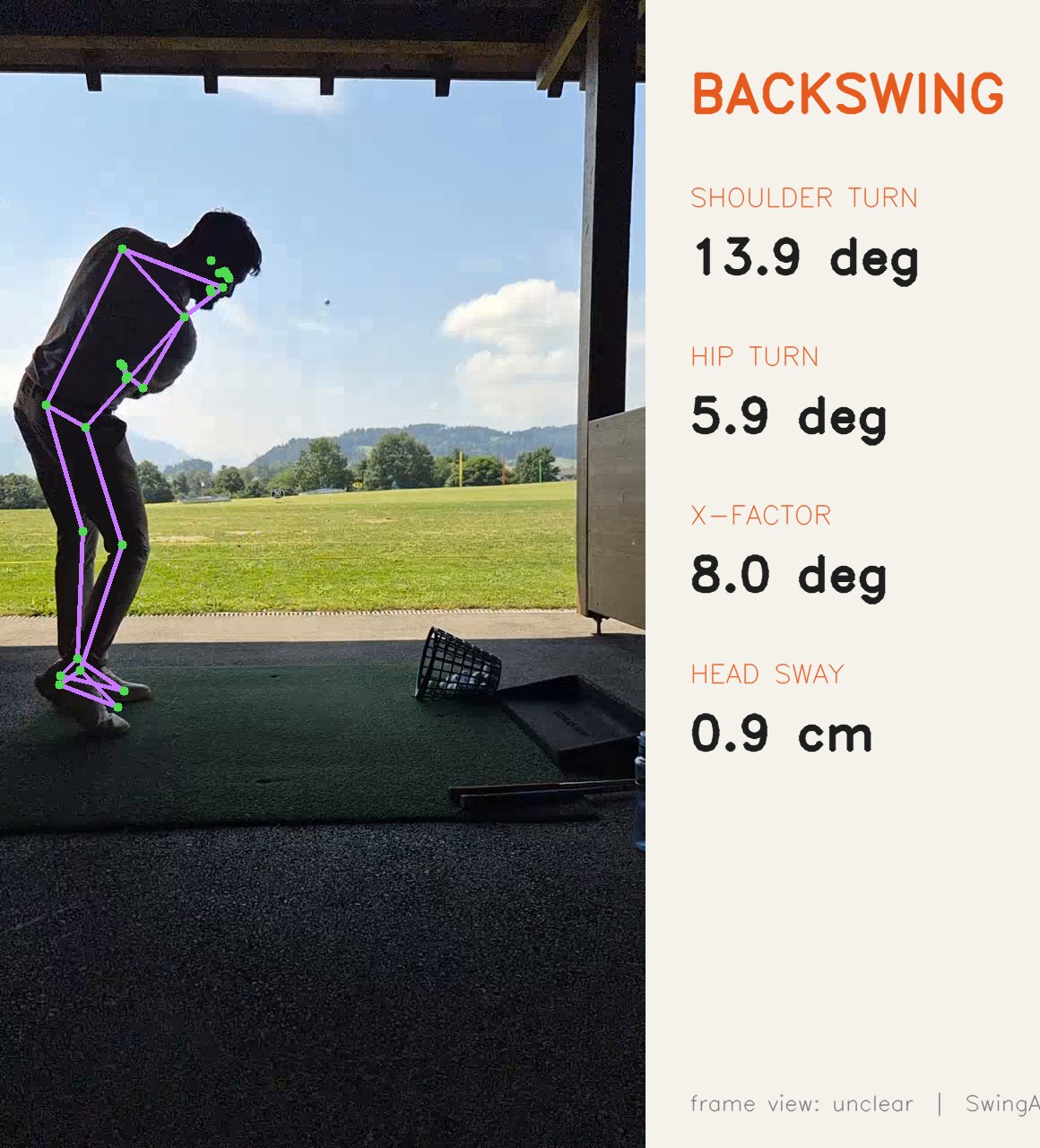
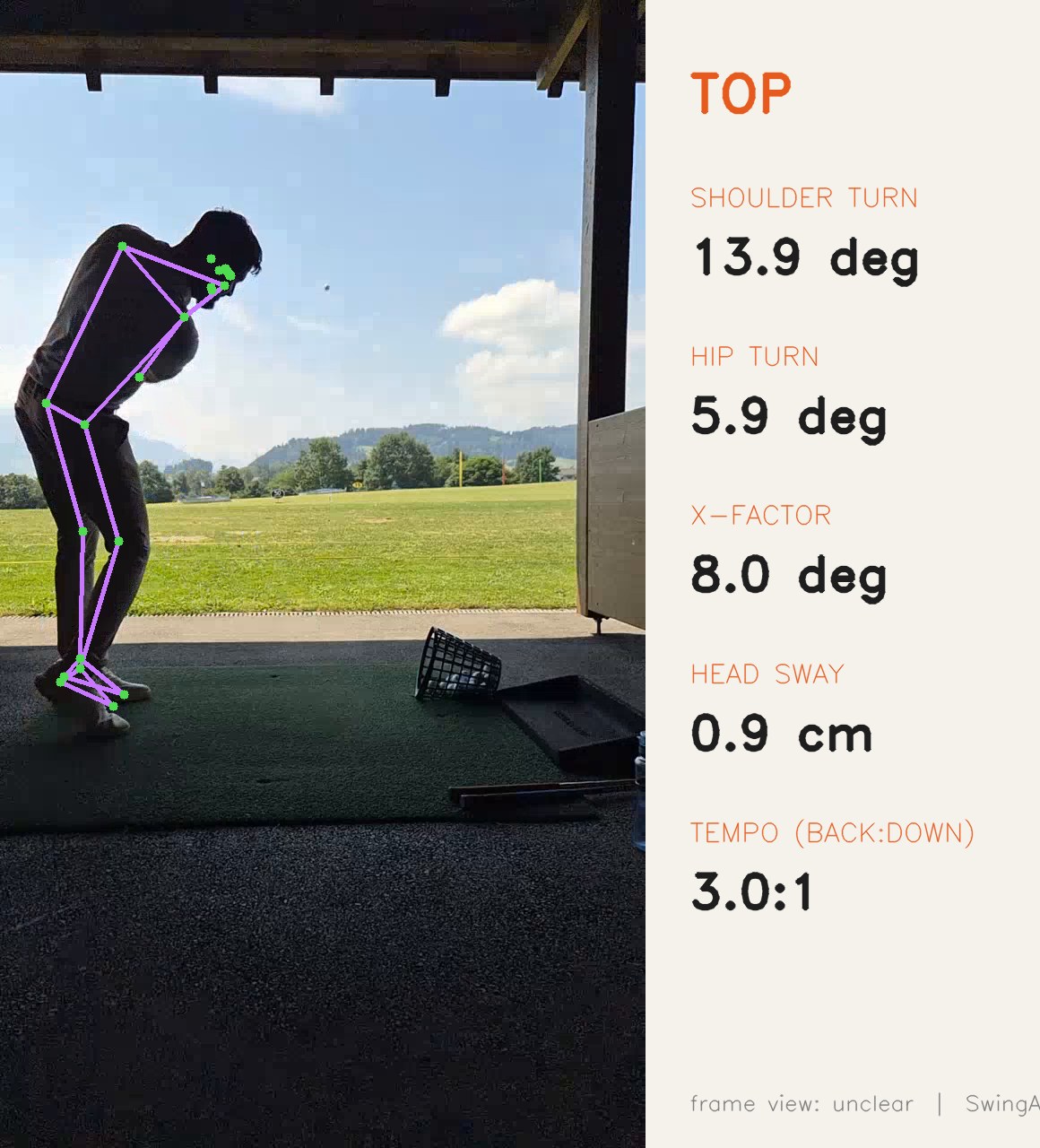
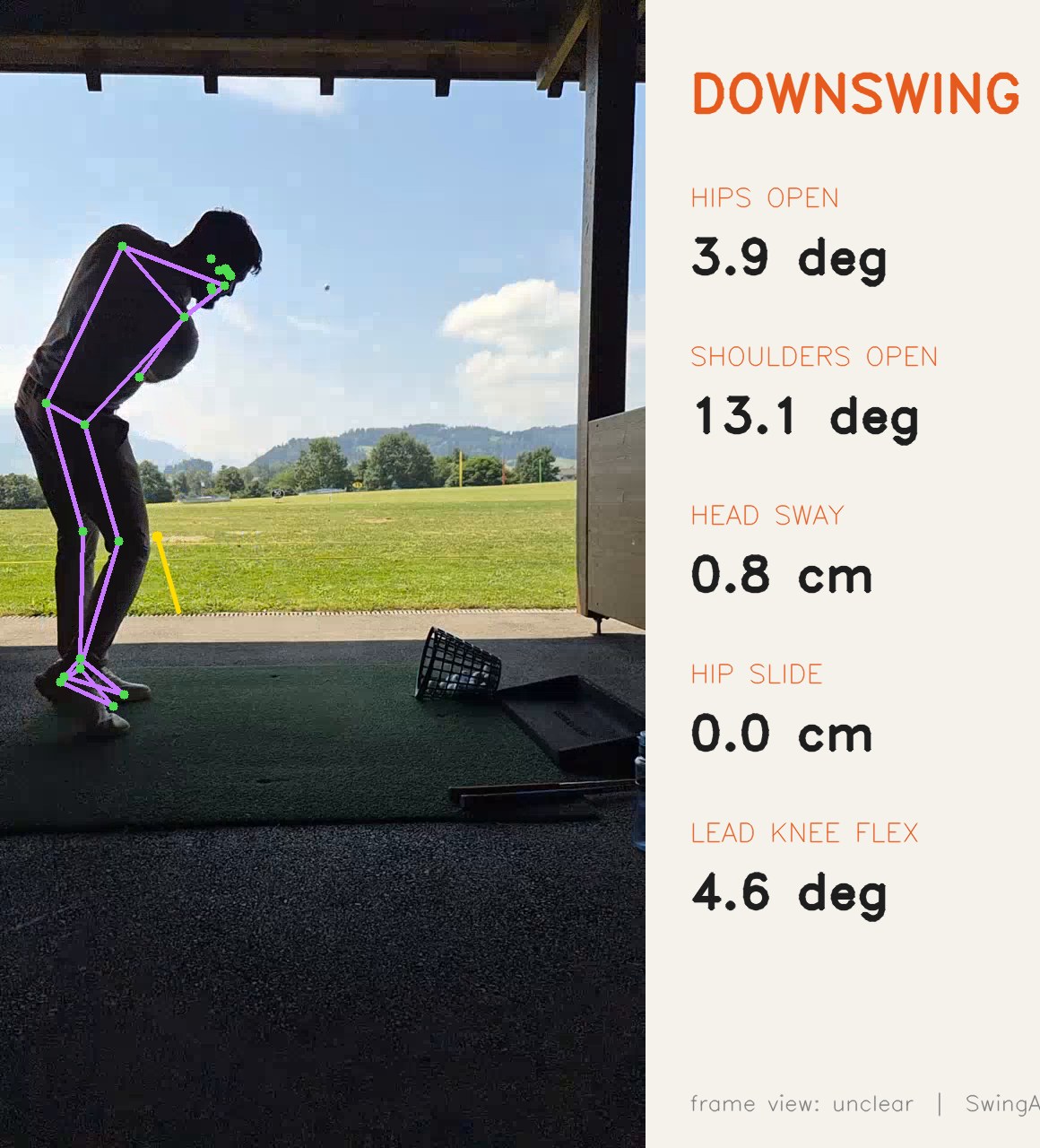
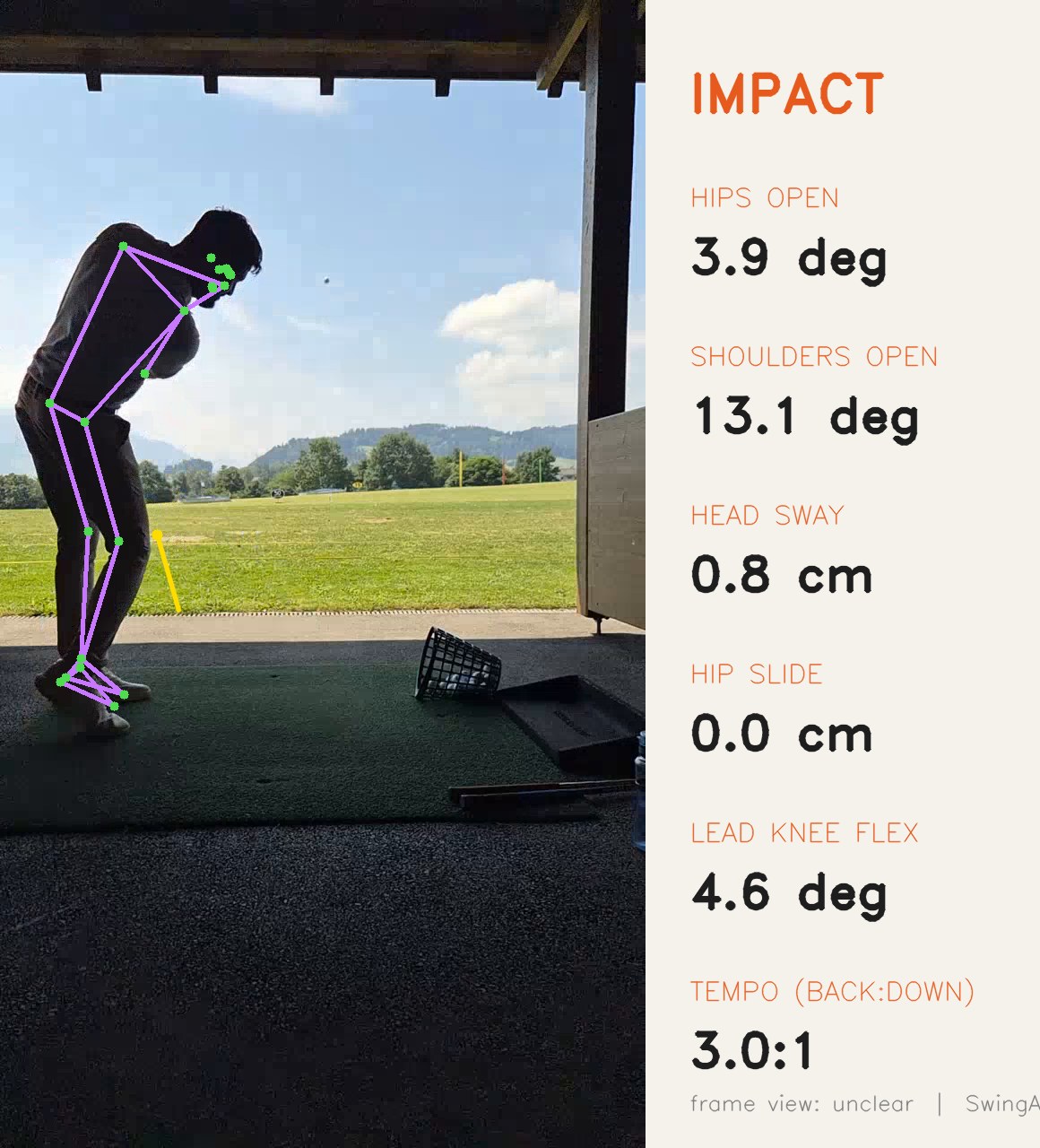
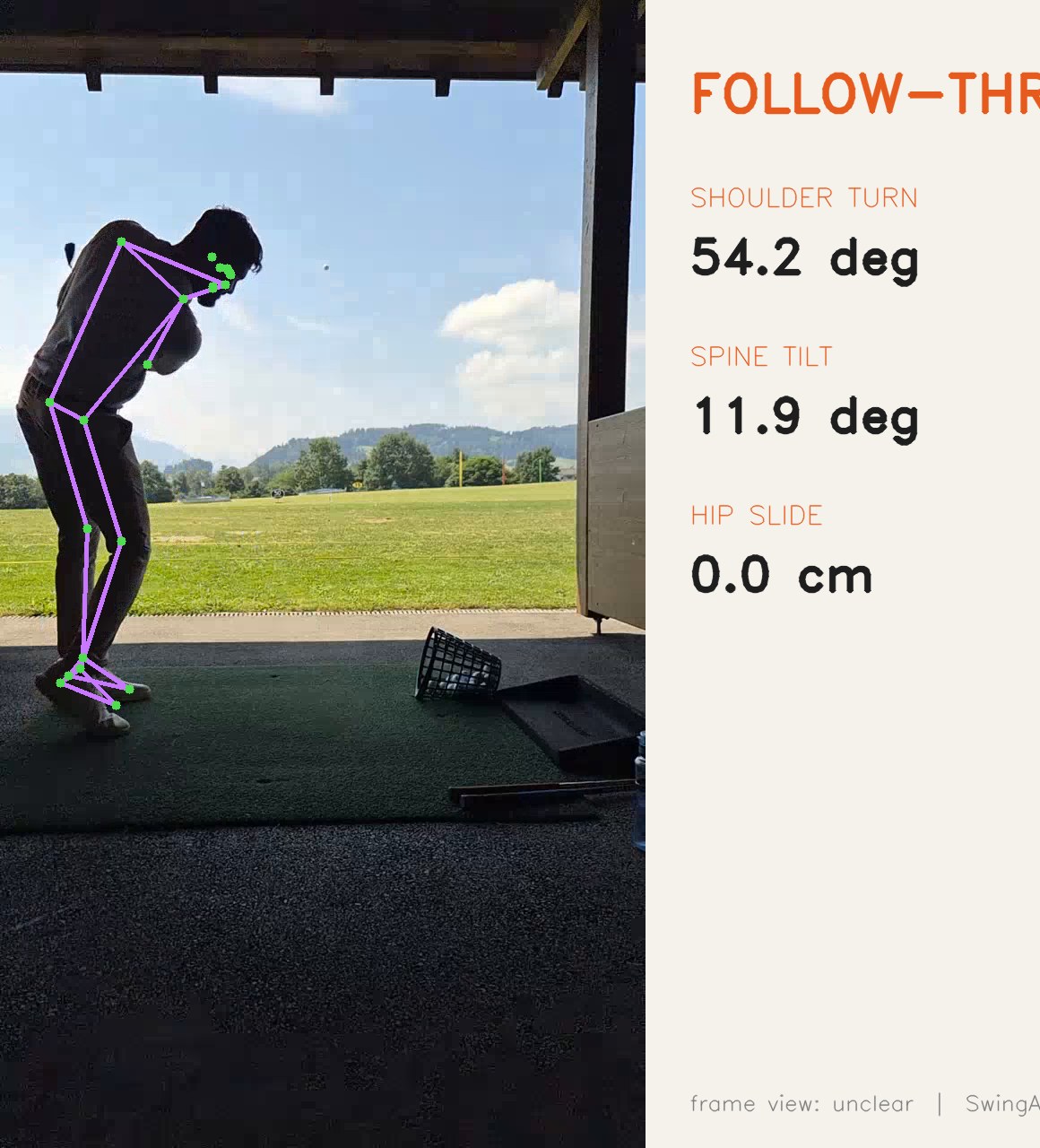
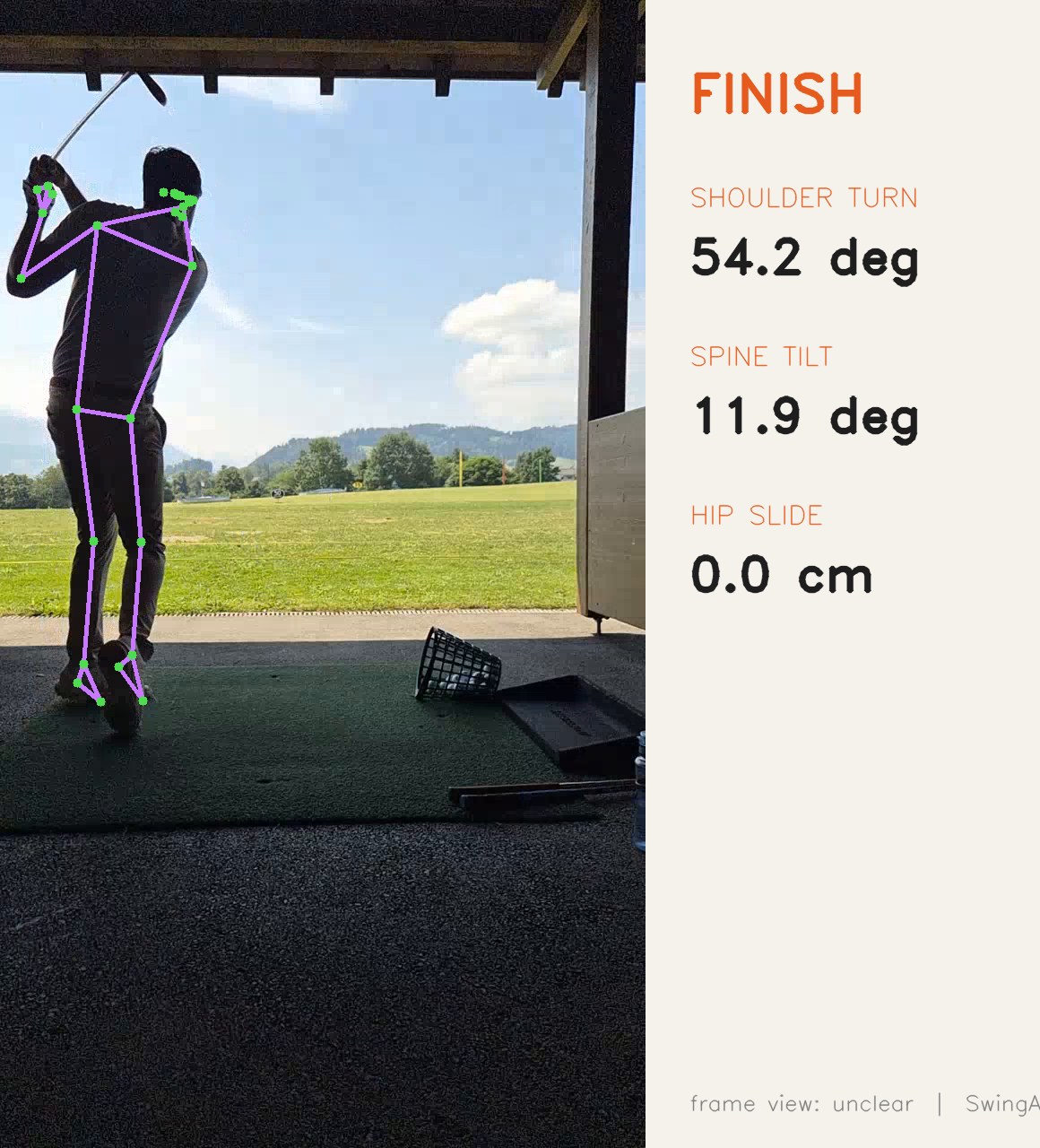
You're filmed as a backlit silhouette from a covered range bay, with the camera roughly behind/to the side of you looking out toward the field — closest to a down-the-line view. The strong backlight turns you into a dark outline, which makes it hard to see grip, clubface and exact arm positions, AND it makes the pose-estimation numbers less reliable than usual. For the cleanest data next time, film with the sun/light behind the camera (not behind you), and set the phone at hip height either directly down your target line or square face-on.
Top 3 Priorities
Make a much bigger shoulder turn in the backswing
Your shoulder turn measured ~14° at the top — the beginner target is 80-105°. Almost all of your consistency and effortless distance comes from turning your torso so your back faces the target. Right now you're lifting the arms instead of turning the body, which forces you to rely on timing and hand action.
▸ Cross-arms turn drill
Without a club, cross your arms over your chest with hands on opposite shoulders and take your golf posture. Turn your lead shoulder down and around until it points behind the ball and your back faces the target, keeping your head still. Do 15 slow reps, feeling the stretch in your trail side — that's the coil you're currently missing.
▸ Club-across-shoulders rehearsal
Hold a club across the back of your shoulders and bend into your posture. Rotate until the lead end of the shaft points down at the ball or just outside it, then return. This trains the feeling of a full body turn so you can copy it with real swings.
Clear your hips through impact
Your hips measured only ~4° open at impact with zero slide toward the target — they're staying square, so the swing is all arms. Getting the hips rotating open (30-60°) toward the target adds speed, helps you transfer weight forward, and makes crisp wedge contact much easier.
▸ Step-and-turn drill
Take slow half-swings and, as you start down, feel your lead hip rotate back and around so your belt buckle ends up facing the target. Exaggerate it at first — 'clear the way' for your arms. Pause at the finish and check your hips are fully open.
▸ Lead-foot pressure drill
Make small swings focusing on pushing into your lead foot and turning that lead hip behind you through impact. You should feel pressure move from the middle of your stance into your front heel as your hips open.
Soften the lead knee and complete the finish
Your lead knee was nearly locked at address (~8° flex), which restricts hip turn, and your finish rotation reached only ~54° versus the 75°+ goal. A little more flex frees the body to rotate both back and through, completing the swing you're already balancing well on.
▸ Athletic knee setup
At address, add a touch of flex to your front knee so both knees match, like you're ready to jump. Feel light and springy rather than locked. This small change lets your hips turn freely in both directions.
▸ Hold-the-finish drill
After each swing, hold your finish for three full seconds with your chest facing the target and weight stacked on your lead foot. If you can't hold it, you over-swung or lost balance — your tempo is good, so use this to groove a complete, balanced turn-through.
Phase Breakdown
Setup6.0
Observed: Spine tilt measured ~36°, which is right in the ideal 15-45° window for an iron — you're hinging from the hips nicely rather than slouching from the back. Trail knee flex ~37° is good, but lead knee flex measured only ~8°, meaning your front leg is nearly locked straight at address. Stance and posture otherwise look athletic in the silhouette.
Good: Excellent forward hip hinge (36° spine tilt) and a solid, balanced base. You look ready and athletic over the ball.
Improve: Soften that lead knee — match it to the trail knee so both have a little flex (~20-25°). A locked front leg restricts how freely your hips can turn going back.
Takeaway5.0
Observed: The frame labeled 'address' actually shows your arms already lifting, so the extraction caught you mid-takeaway — your hands move away while the head stays steady (head sway under 1 cm throughout, which is great). The motion looks fairly hands/arms driven rather than a one-piece turn of the chest, arms and club together.
Good: Rock-steady head and a connected-looking start with the triangle of your arms and shoulders intact.
Improve: Start the club back by turning your chest, not by lifting your hands. Feel the clubhead, hands and chest move away as one unit for the first foot or so.
Backswing4.0
Observed: This is the big story of the swing. Shoulder turn at the top measured only ~14° and hip turn ~6°, with an X-factor of ~8°. Even allowing for the silhouette/backlight reducing accuracy, the frames confirm a very short, arm-dominant lift — your torso barely rotates and the club doesn't get to a full top position. Head stayed beautifully quiet (0.9 cm sway).
Good: Outstanding stability — almost zero sway means you're rotating around a fixed center, which is a great foundation. No swaying off the ball.
Improve: You need far more body turn. The beginner goal is 80-105° of shoulder turn; you're a fraction of that. Turn your lead shoulder behind the ball so your back faces the target — this is where almost all your power and consistency will come from.
Transition5.0
Observed: Tempo measured 3.0:1 (and 3.5±0.5 across your three swings) — that's squarely in the ideal 2.5-3.5 range, so your rhythm is genuinely good. With such a short backswing, though, there isn't much stored coil for the lower body to unwind.
Good: Beautiful, unrushed tempo — you're not stabbing at the ball. This is a real strength most beginners struggle with.
Improve: Once you build a bigger turn, focus on letting the hips start down first. For now, the priority is simply making a fuller backswing so transition has something to transfer.
Downswing5.0
Observed: Frames from mid-backswing through 'impact' look nearly identical — a compact, hunched delivery. Because the backswing is so short and the hips stay quiet, this plays as a mostly arms-down strike. Head stayed behind the ball, which is good.
Good: Head position stays behind the ball and centered — you're not lunging or casting violently.
Improve: With more turn behind you, let the lower body lead the return. Feel weight shift to your lead foot as the arms drop, rather than spinning the upper body to hit.
Impact4.0
Observed: Hips measured only ~4° open at impact (shoulders ~13°) with essentially zero hip slide toward the target. Tour players are ~40° open. Your hips are basically square at impact, so the swing is being powered by the arms and a stable body rather than rotation and weight transfer.
Good: Steady head and a stable, non-sliding base — you're making solid contact from a balanced position.
Improve: Get your hips clearing and opening through the ball — aim for 30-60° open at impact. Feel your belt buckle and lead hip rotating toward the target as you strike. This adds speed and helps the wedge bottom out in the right spot.
Follow-through6.0
Observed: The finish frame is the best of the swing — you've rotated to face the field, the club is up over the lead shoulder, and you're balanced up onto your lead side with the trail foot releasing. Finish shoulder turn measured ~54° (target is 75°+) and you stood tall (spine tilt 12°), so the rotation is still incomplete but the balance is there.
Good: Genuinely good, held, balanced finish on the lead foot — a great sign that your tempo and base are working.
Improve: Complete the rotation so your chest and belt buckle fully face the target and you can hold the pose comfortably. A fuller backswing will naturally let you finish more rotated.
Club Notes
With a pitching wedge you don't need a huge, fast swing — but you do need enough body turn to make solid, ball-first contact. A compact arm swing like this often produces thin or fat strikes because the low point wanders. The good news: your steady head and smooth tempo are exactly what wedges reward, so adding rotation should quickly give you cleaner, more predictable distance control.
From Coach AI
You've got the two hardest things to teach already baked in — a beautifully steady head (under 1 cm of sway) and smooth, repeatable tempo right in the ideal 3:1 range. That balanced, held finish is something a lot of golfers never achieve. The single thing standing between you and much better ball-striking is simply turning your body more — make that fuller shoulder turn and let your hips clear, and you'll keep all this stability while adding real power and consistency. Work the cross-arms turn drill and you'll see it click fast.
Notes
No notes yet. Tap Add to write one.
Launch Monitor
Add TrackMan / Garmin / Mevo numbers from your shot to ground the coaching in what the ball actually did — then Reanalyze.
Ask the Coach
Ask a follow-up question about this swing — e.g., “why is my backswing scored low?” or “what should I feel during the transition?”